
The Power of Protein: How Much, What Kind, and When for Real-World Results
Let's be honest, protein advice is everywhere, and most of it sounds like it was written by someone who's never actually had to meal prep on a Sunday while dealing with real life. You've probably heard everything from "eat 1 gram per pound of body weight" to "timing doesn't matter at all" to "plant protein doesn't count."
Here's the thing: protein doesn't have to be complicated. You don't need to carry around a food scale or chug chalky shakes every three hours. But understanding the basics? That's actually going to help you feel stronger, recover better, and maybe stop feeling hangry at 3 PM.
How Much Protein Do You Actually Need?
The short answer: it depends on what you're trying to do with your body right now.
Quick reality check: the RDA sits around 0.36 grams per pound — that's the bare minimum to avoid deficiency. Helpful? Not really for performance, body comp, or feeling strong.
Most people do best around 0.8 grams per pound of body weight (g/lb) per day. Think of it as your default. Use the range to personalize: start at 0.6 g/lb if getting enough protein feels tough right now; push closer to 1.0 g/lb if you're training hard and want to maximize muscle and recovery. For a 150-pound person, that's roughly 90-150 grams per day, with 120g as a solid middle ground.
Most people under-eat protein unless they're intentional. A little planning goes a long way.
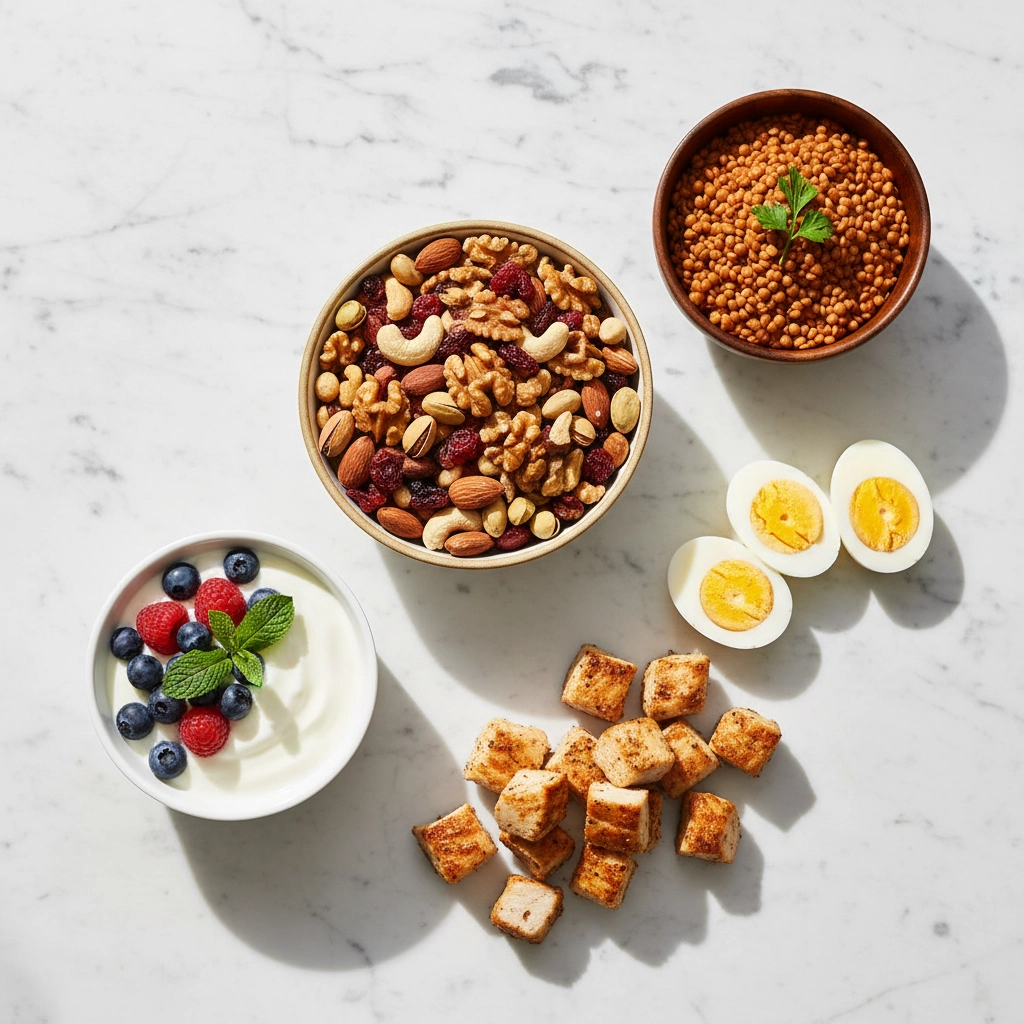
Now, before you start panicking about hitting exact numbers, breathe. The truth? Most people fall short on protein unless they're intentional — but it's totally fixable. A Greek yogurt for breakfast (15-20g), some chicken in your salad at lunch (25-30g), and salmon for dinner (25-30g) gets you to 65-80 grams before snacks. Add a protein-rich snack or two and you're in business.
What if you're older? This is important because nobody talks about this enough. If you're over 65, your protein needs actually go UP — aim around 0.7-1.0 grams per pound to keep muscle on. Your body gets less efficient at using protein as you age, so you need more to maintain the same muscle mass. It's not fair, but it's reality.
And if you're dealing with illness, injury, or major life stress? Your body is going to need even more to repair and recover. Don't feel guilty about eating that extra helping of whatever protein sounds good, your body is literally asking for it.
What Kind of Protein Actually Matters?
Here's the deal: animal proteins (meat, fish, eggs, dairy) are naturally "complete" — they contain all the essential amino acids in solid amounts. Most single plant proteins aren't complete on their own, which is why pairing them for amino acid complementarity matters. Your body still breaks everything down into amino acids, but the mix you give it affects how efficiently you can build and repair muscle.
That said, some sources are definitely more convenient than others, and some come with bonus nutrients that make them worth prioritizing.
The Usual Suspects (And Why They Work)
Fish and seafood are probably your MVP proteins. They come with those omega-3 fatty acids everyone's always talking about, and they're usually pretty quick to cook. Aim for 2-3 servings per week, and try to include some of the oily fish like salmon, sardines, or mackerel when you can.
Lean meats and poultry are straightforward and familiar. Stick with 3-4 ounce servings (about the size of your palm), and don't stress too much about organic vs. conventional unless it matters to you personally.
Eggs are basically nature's protein powder. Cheap, versatile, and you can cook them approximately 47 different ways. If you're worried about cholesterol, the current science says most people can handle about one whole egg per day without issues.
Dairy can be great if you tolerate it well. Greek yogurt, cottage cheese, and milk are all solid options. Go for lower-fat versions if you want more protein per calorie, but don't feel like you have to avoid fat entirely.
Plant-Based Options That Actually Fill You Up
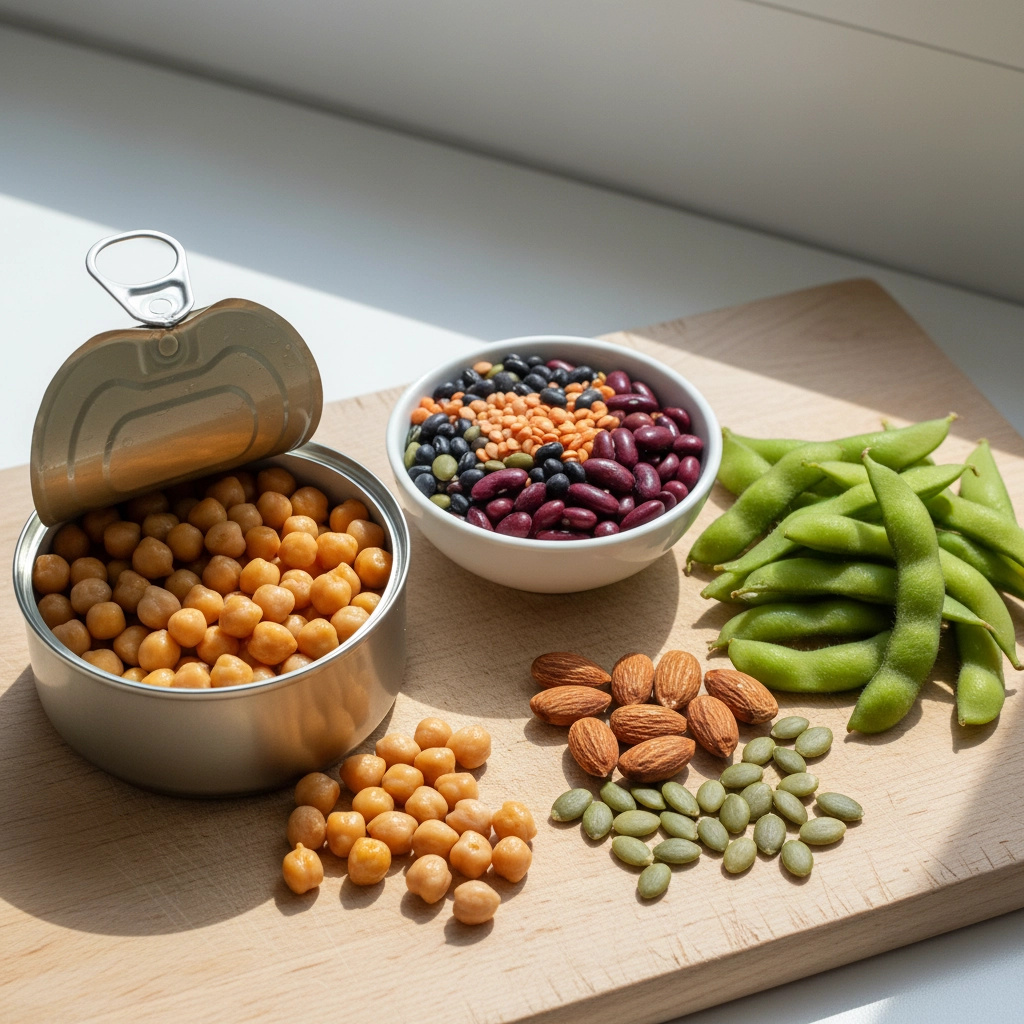
Legumes (beans, lentils, chickpeas) are criminally underrated. A cup of cooked lentils has about 18 grams of protein plus a ton of fiber. They're cheap, they keep forever, and you can throw them into practically anything.
Nuts and seeds aren't going to be your main protein source, but they add up throughout the day and bring healthy fats along for the ride.
You don't need to nail perfect combos in the same meal, but do make sure you pair plant proteins across your day so you cover all the essentials. Easy examples:
rice + beans
lentils + grains (like lentil soup with whole-grain toast)
hummus + pita (or a whole-wheat wrap with chickpeas)
tofu or tempeh + rice/quinoa
peanut butter + whole-grain bread or oats
Even if you eat everything, mix it up so you don't burn out on chicken and so you diversify nutrients. Pair animal and plant proteins:
chicken + black beans in a burrito bowl
salmon + edamame + rice
eggs + spinach + feta + whole-grain toast
Greek yogurt + nuts and seeds
When to Eat Protein (Without Losing Your Mind)
Okay, this is where the fitness industry really goes off the rails with complicated timing protocols. Here's what actually matters:
Spread it out across your day. You don't need to eat every three hours, but having some protein at each meal and snack generally works better than saving it all for dinner.
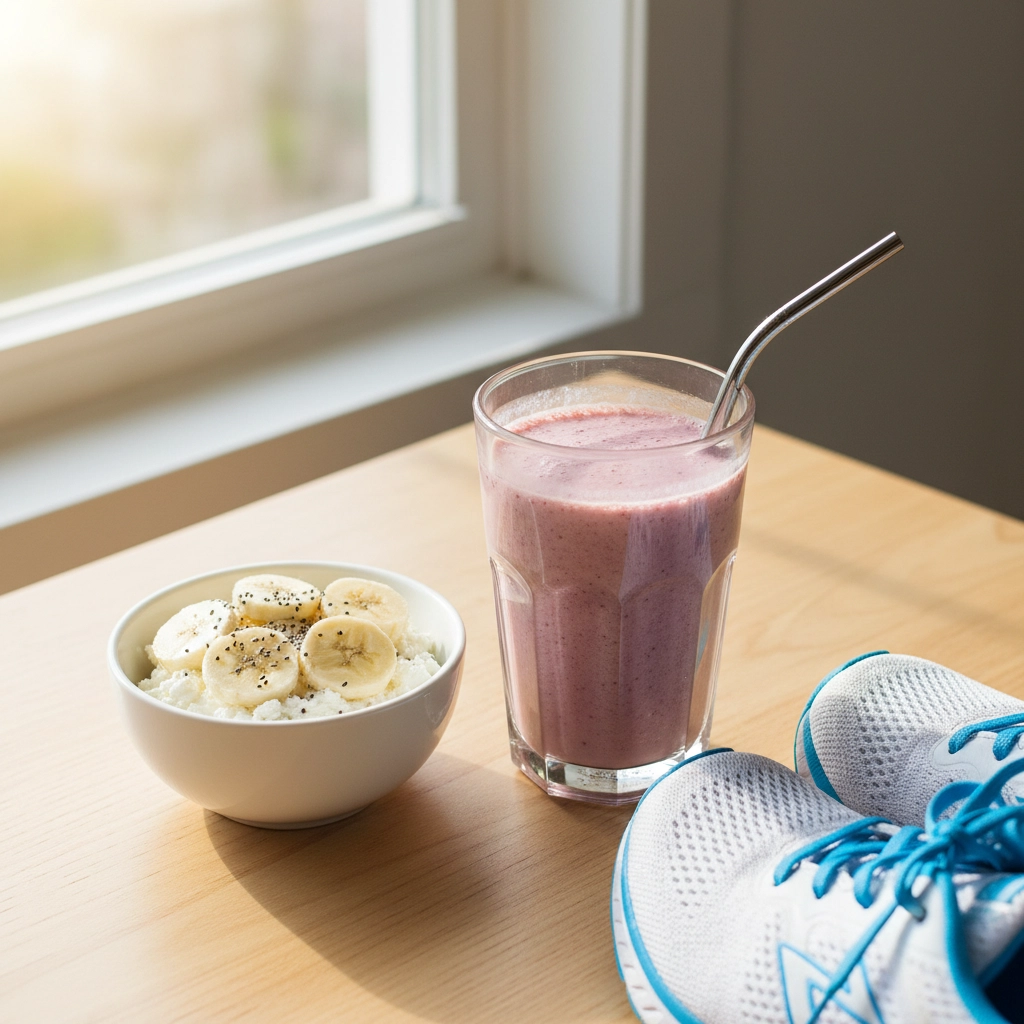
If you work out, try to get some protein within a few hours of training. The famous "30-minute anabolic window" is mostly marketing nonsense, but your muscles are going to be more receptive to protein for several hours after you exercise. A protein-rich snack or meal works great.
Don't stress about the exact timing. Seriously. If you had a protein-heavy breakfast and then don't eat again until lunch, you're not going to waste away. Your body is remarkably good at holding onto nutrients until it needs them.
One thing that might actually matter: having some protein before bed. About 20-30 grams of slower-digesting protein (like Greek yogurt or cottage cheese) can help with overnight muscle recovery. But only if it fits into your day and doesn't mess with your sleep.
Making It Work in Real Life
Here's the part where we get practical. Because knowing you need 80-100 grams of protein per day is one thing: actually hitting that target while dealing with work, kids, and everything else is another.
Try a short tracking sprint (2–3 weeks)
You don't need to track forever. Promise.
Log what you already eat for 14–21 days to learn your baseline.
Measure once, then eyeball: how much chicken do you usually eat at lunch? fish at dinner? how big is your yogurt bowl?
After that, stop tracking and use what you learned to build balanced meals without the food scale.
Easy Protein Wins
Keep hard-boiled eggs in the fridge for grab-and-go situations
Add a scoop of protein powder to smoothies, oatmeal, or pancake batter
Double up on the protein in meals you're already making (extra chicken in the stir-fry, beans AND cheese in the burrito)
Greek yogurt with berries is basically a protein dessert that's also breakfast
Rotisserie chicken exists for a reason: use it
When Convenience Foods Are Actually Smart
Let's talk about protein bars, powders, and other processed options for a second. Are they necessary? No. Are they sometimes incredibly helpful? Absolutely.
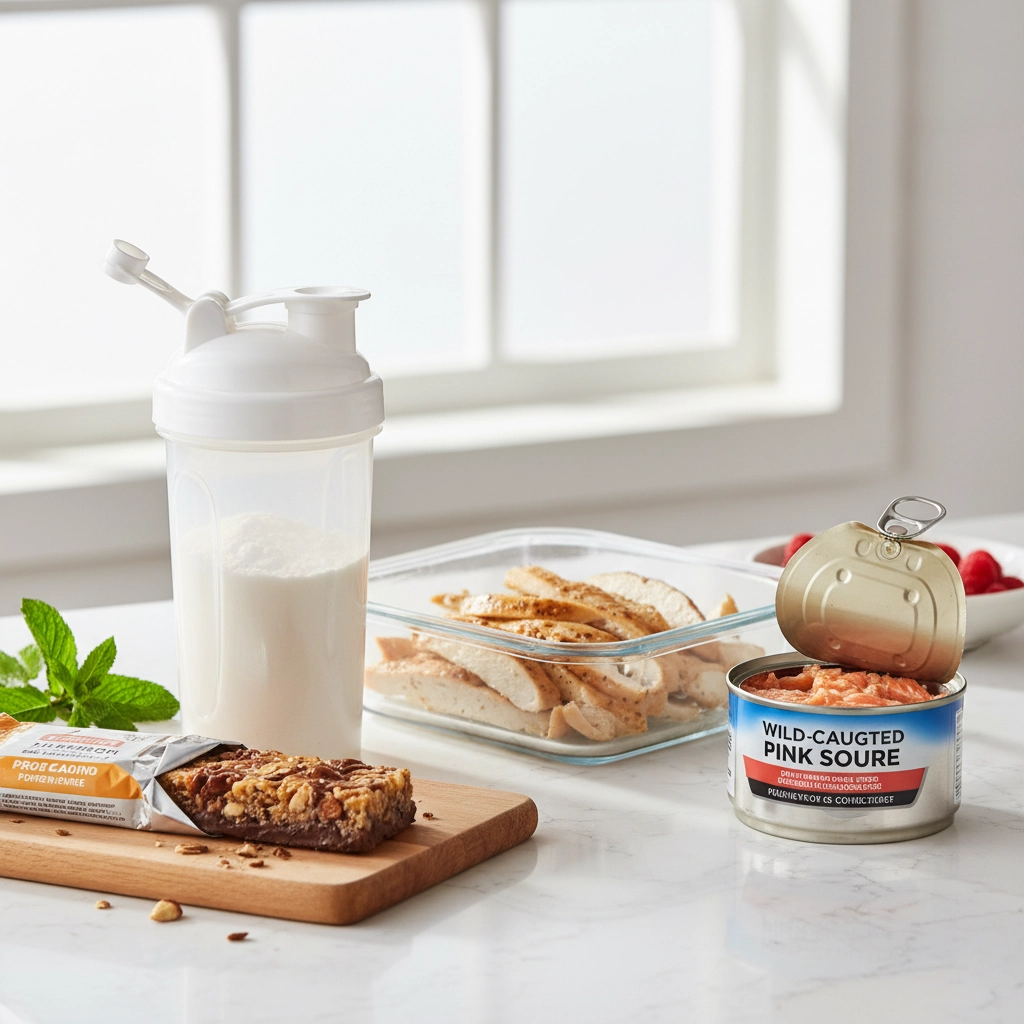
A protein bar in your car or gym bag can be the difference between getting adequate protein and ending up hangry and ordering takeout at 8 PM. A protein shake can turn a piece of fruit into a more balanced snack. Canned salmon, frozen shrimp, pre-cooked chicken strips: these aren't "cheating," they're tools.
The key is using them as supplements to a mostly whole-food diet, not replacements for actual meals.
The Bottom Line: Keep It Simple
Here's what you actually need to remember:
Aim for about 0.8 g/lb most days — use the 0.6-1.0 g/lb range to fit your training, appetite, and goals
Include some protein at most meals rather than saving it all for dinner
Choose sources you actually enjoy eating because consistency beats perfection
Don't stress about the exact timing unless you're a competitive athlete (and even then, it's not make-or-break)
Your protein doesn't need to be perfect. It just needs to be adequate and consistent. Some days you'll hit your targets easily, some days you'll come up short, and that's completely normal.
The goal isn't to optimize every single gram: it's to fuel your body well enough that you can show up for your workouts, recover from your days, and feel strong in your own skin.
And if you're still feeling overwhelmed by all of this? Start simple. Add one protein-rich snack to your day this week. See how it makes you feel. Then build from there. You've got this.
Comments