
Stop Relying on Willpower: 7 Environment Tweaks That Make Healthy Habits Easier
If you’ve tried to “be more disciplined” and it fades by Wednesday, the problem isn’t you. It’s your setup. Behavior follows environment. Reduce decisions, reduce friction, and you’ll do the thing more often. That’s how I coach at FORMA.
Here are seven changes I use with clients—everyday athletes and people rebuilding habits. They’re simple, realistic, and they work.
1) Make the good habit the easy option
The more steps something takes, the less likely you’ll do it. Remove steps.
Lay out clothes, shoes, and headphones the night before. Pack your gym bag. Put your water bottle by your keys.
If mornings are tough, set the alarm across the room so you’re upright before you can negotiate with yourself.
Pre-stage equipment: kettlebell by the desk, bike shoes by the trainer, walking shoes by the door.
Make the gap between decision and action tiny, especially when your brain is tired.

2) Remove easy access to the thing you’re trying to limit
This is basic stimulus control. If it’s in the house, it’s in your mouth.
Clear the pantry of default snacks you overeat. If you keep some for kids/guests, store them out of sight and out of reach (high shelf, garage bin, opaque container).
Make single-serving options the default if you do keep treats.
Delete or block delivery apps you lean on when stressed. Remove saved cards from your phone/computer. Adding two extra steps is often enough to break the loop.
You don’t need more willpower. You need fewer convenient temptations.
3) Add friction to the stuff that derails you
Inconvenience breaks autopilot.
Unplug the TV when you’re done. If that’s not enough, put the remote in another room or the TV in a closet. Setup hassle = less mindless viewing.
Put your phone in a drawer during focus blocks. Turn off non-essential notifications. Use grayscale to make the screen less appealing. Charge the phone outside the bedroom.
Log out of time-wasting sites and turn off autoplay. Require a password each time.
Make the unhelpful option just annoying enough that you skip it.
4) Put cues where your eyes already go
Cues drive behavior. Make the helpful ones obvious.
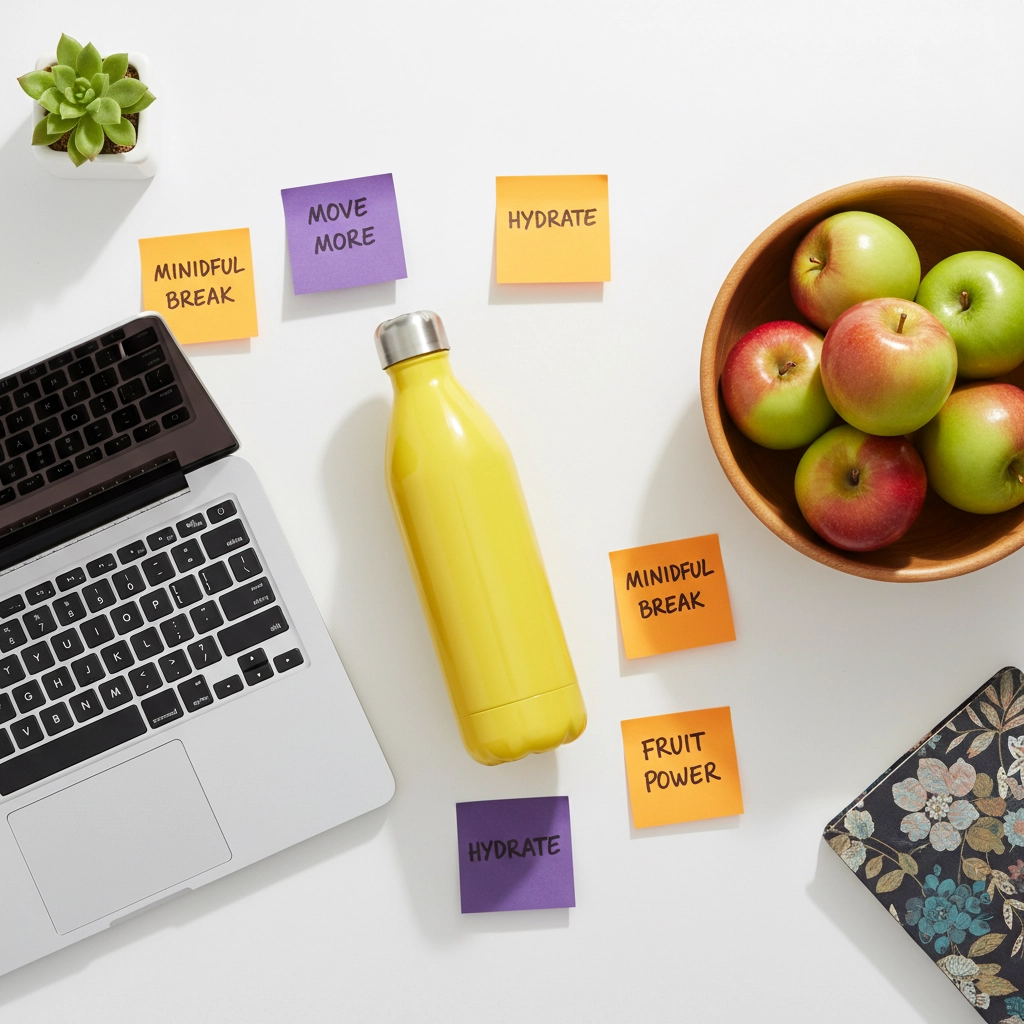
Keep a full water bottle on your desk, in your car, and in your gym bag.
Put fruit or protein-forward snacks on the front of the shelf, not buried behind boxes.
Leave your yoga mat or dumbbells visible if you plan a short session.
Use plain reminders you won’t tune out: a sticky note that says “10-min walk after lunch” or a calendar alert for “vitamins with coffee.”
Refresh or move cues every few weeks so you still notice them.
5) Attach a new habit to one you already do
This is habit stacking (implementation intentions). “After X, I will Y.”
After I pour coffee, I take my vitamins.
After I brush my teeth, I do 5 minutes of mobility.
After I park at work, I take the stairs for one flight.
After dinner, I prep tomorrow’s protein.
Keep it specific and small (1–5 minutes). Consistency first, then build.
6) Clean up your phone and laptop
Your digital environment counts as much as your kitchen.
Unfollow accounts that trigger comparison or unhelpful urges. Follow accounts that normalize training, sleep, and fueling well.
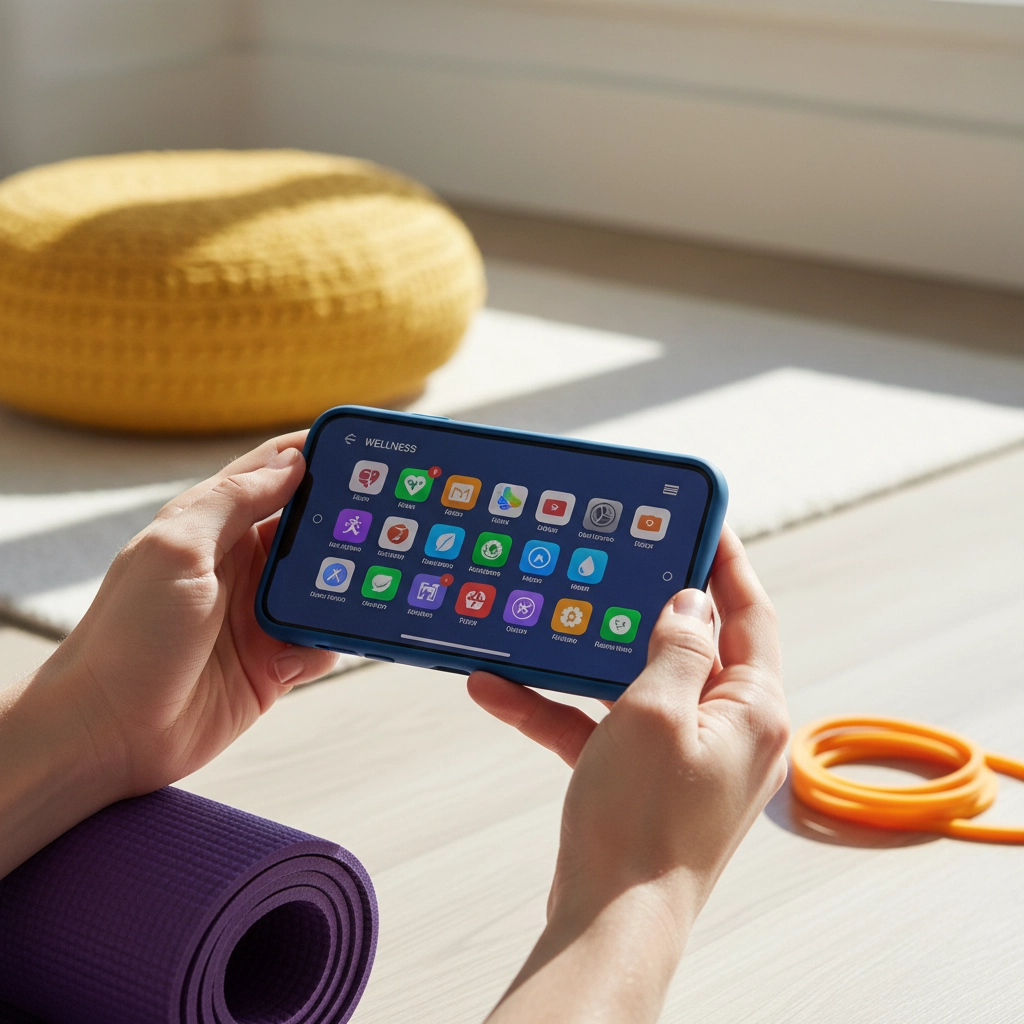
Move time-wasters off the home screen or delete them. Put helpful apps (workout, notes, grocery list) front and center.
Schedule Do Not Disturb/Focus modes nightly. Set app limits. Use reminders for water, meds, or a walk if you actually respond to them.
Make your devices boring when you need to focus and useful when you need support.
7) Create small zones that make the next action obvious
You don’t need a full home gym. You need a spot that removes excuses.
Training corner: a mat, one or two implements (kettlebell, bands), and a timer. That’s enough for most sessions.
Kitchen setup: cutting board, knives, containers, and a bin with staples (salt, oil, spices) in one reach. Put protein and produce at eye level in the fridge.
Work-from-home setup: water within reach; higher-calorie snacks out of reach; plan one set snack time.
Design for the person you’re practicing being. Make the next right action obvious and easy.
What actually works long-term
People who succeed don’t have more willpower. They have better defaults. Change the environment and your choices get easier.
Pick one tweak. Install it this week. Run it for 7–14 days. Then add one more. Adjust as needed. Systems beat motivation over time.
Comments