
Do You Really Need a Fitness Tracker? Here's the Truth
Let's be real for a second, fitness trackers are EVERYWHERE. Your coworker's bragging about their 10,000 steps, your mom's asking if her heart rate zones are "normal," and that friend who never used to exercise is suddenly obsessed with closing their activity rings.
But here's the thing: do you actually need one?
I'll be honest, I wear an Apple Watch. But before you think I'm about to tell you to run out and buy one, hold up. I don't think it's a must-have, and I've seen too many people turn what should be a helpful tool into a source of stress and obsession.
So let's cut through the marketing hype and figure out if a fitness tracker makes sense for YOU.
The Truth About Who Actually Benefits
Not everyone needs a fitness tracker. I know, shocking, right? But the reality is that these devices work best for specific types of people in specific situations.
The Inconsistent Starter
You know who you are. You have good intentions, but your workout routine looks like a roller coaster, up for two weeks, down for a month, repeat. If you're someone who struggles with consistency and needs that external nudge to get moving, a fitness tracker can be a game-changer.
These devices excel at creating accountability for people who don't have it naturally built in. The gentle buzz reminding you to stand up, the daily step goal staring you in the face, for some people, that external motivation is exactly what they need to build momentum.
The Data-Driven Optimizer
Maybe you're the type who loves seeing patterns and trends. You want to know if your sleep is improving, how your resting heart rate changes with training, or whether you're actually more active on certain days of the week.
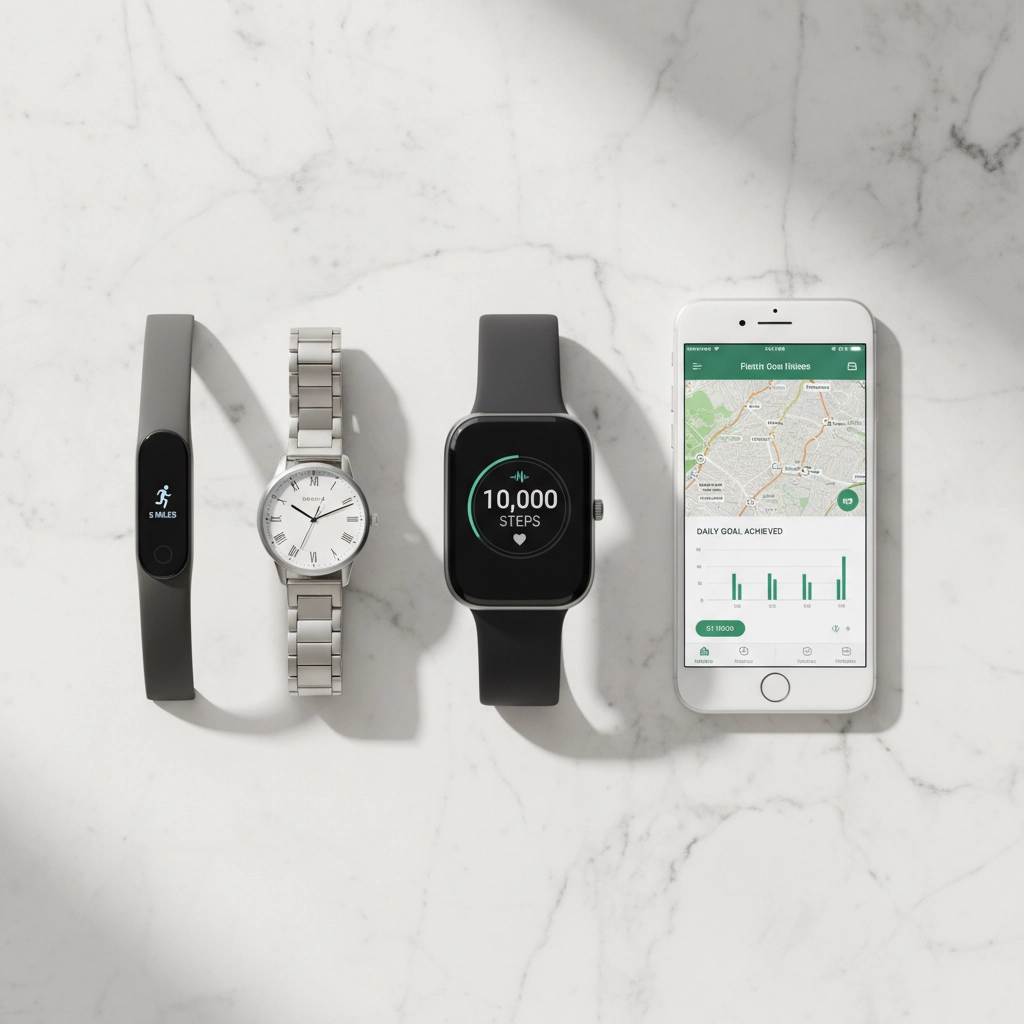
For this group, fitness trackers shine because they're excellent at tracking trends over time. Notice I said trends, not precise measurements. We'll get to accuracy in a minute.
The Midlife Wellness Rebuilder
If you're in your 40s, 50s, or beyond and getting back into fitness after years of putting it on the back burner, a tracker can provide some helpful guardrails. It can help you understand what "moderate activity" actually feels like and give you confidence that you're moving in the right direction without overdoing it.
But here's what I see too often: people in this group getting so focused on hitting arbitrary numbers that they lose sight of how they actually FEEL.
When Fitness Trackers Actually Hurt More Than Help
The Already-Motivated Athlete
If you're already hitting the gym regularly, going on runs because you love it, or have established healthy habits that you maintain without external reminders, you probably don't need a fitness tracker at all.
In fact, it might actually mess with your head. When you're intrinsically motivated (meaning you exercise because you enjoy it and it makes you feel good), adding external metrics can sometimes undermine that natural drive.
The Perfectionist Who Spirals
This is the person who has a bad day and sees their step count is only 6,000 instead of 10,000, then beats themselves up about it. Or worse, pushes through an injury because they "need" to close their rings.
If you're prone to all-or-nothing thinking, fitness trackers can feed that monster. The device becomes a judge instead of a tool, and suddenly you're more stressed about your metrics than focused on your actual health.
The Accuracy Problem Nobody Talks About
Here's something the marketing departments don't want you to know: fitness trackers aren't that accurate.
Your step count? Could be off by hundreds. Heart rate during exercise? Often way off, especially if you're doing anything with arm movement. Calories burned? That's basically a educated guess based on averages.
Does this mean they're useless? Not necessarily. But it means you shouldn't treat those numbers as gospel.

The value isn't in the precision, it's in the trends. If your tracker shows you're consistently more active on weekdays than weekends, that's useful information even if the exact numbers aren't perfect. If you notice your resting heart rate trending lower over months of training, that's a good sign even if the specific BPM reading isn't lab-accurate.
My Take: It's a Tool, Not a Lifestyle
I wear my Apple Watch, but I don't live by it. Some days I forget to put it on and you know what? The world doesn't end. My fitness doesn't disappear.
Here's how I think about it: a fitness tracker is like a kitchen scale. If you're trying to learn portion sizes or understand your eating patterns, it can be incredibly helpful for a while. But once you develop that intuition, you don't need to weigh every single thing forever.
The goal should be to use the tracker as training wheels while you develop better habits and body awareness. Then, gradually, you rely on it less.
Making It Work FOR You (Not Against You)
If you decide a fitness tracker makes sense for your situation, here are some ways to keep it healthy:
Set it and forget it sometimes. Don't check your stats obsessively throughout the day. Maybe look at your weekly summary instead of daily numbers.
Focus on one metric that actually matters to you. Don't try to optimize steps, heart rate zones, sleep scores, and calorie burn all at once. Pick what's most relevant to your current goals.
Take breaks. If you notice you're getting anxious about your numbers or feeling guilty about "bad" days, leave the tracker at home for a week. See how you feel without it.
Remember what you're actually trying to achieve. Are you trying to feel stronger? Have more energy? Sleep better? Keep THOSE goals front and center, not the numbers on your wrist.
The Bottom Line
You don't need a fitness tracker to get fit, feel good, or be healthy. People have been doing that successfully for thousands of years without wrist-based technology.
But for some people, in some situations, they can be helpful tools. The key is being honest about which category you fall into and using the device as a means to an end, not the end itself.
If you're already consistent with exercise and in tune with your body, save your money. If you're struggling with motivation and accountability, it might be worth trying, with the understanding that the real goal is to eventually develop habits that don't require constant external validation.
And if you do get one? Please, PLEASE don't let it stress you out. It's supposed to make your life better, not worse.
The most important fitness tracker is the one between your ears: your ability to notice how you feel, what your body needs, and what actually makes you want to keep moving. No device can replace that.
Comments