
Midlife Energy: 5 Nutrition Moves That Actually Work (No Restrictive Dieting Required)
Updated: Oct 9, 2025
If you crash mid-afternoon or wake up tired, these are the nutrition levers that consistently help my midlife clients. No detoxes. No cutting whole food groups. Just actions that hold up in the research and in real life.
Tip #1: Control Blood Sugar Swings (Keep the Carbs, Choose Smart Ones)
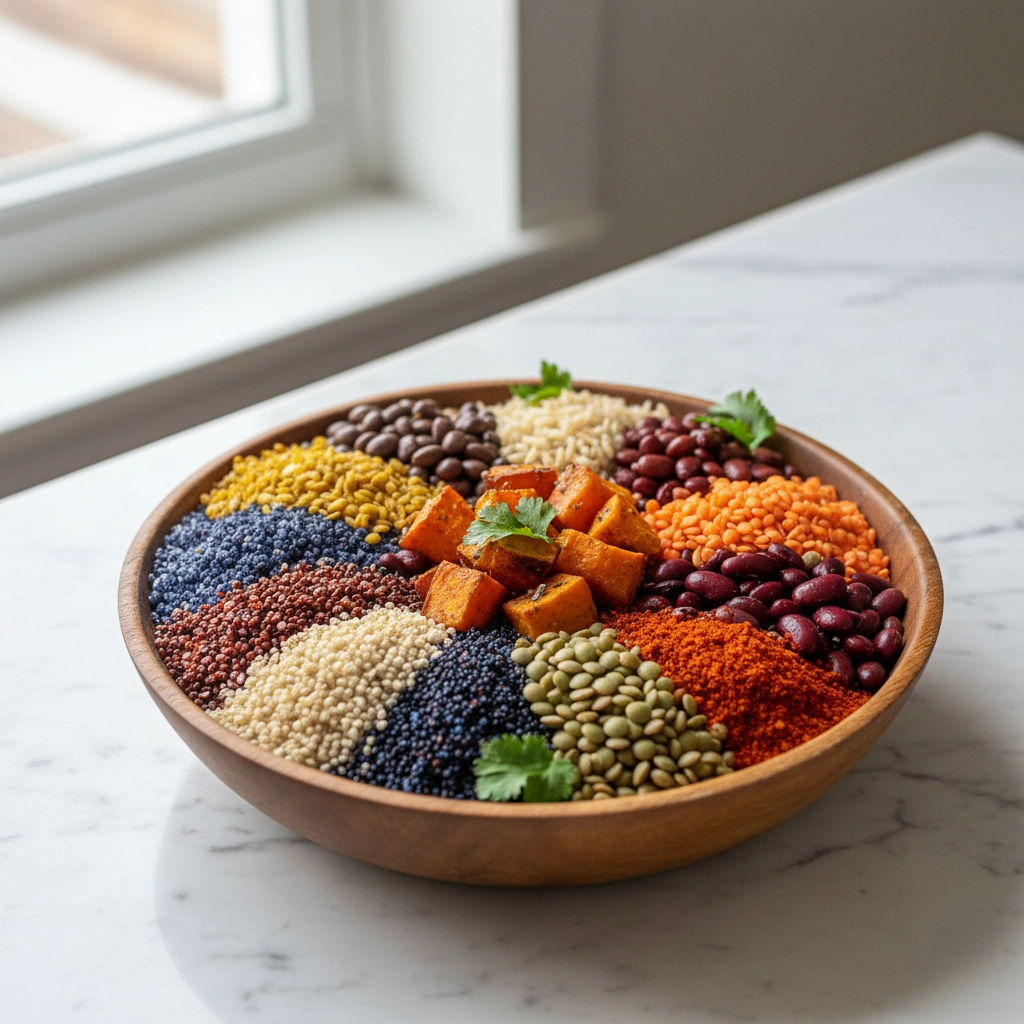
Carbs aren’t the problem. Rapid-digesting, low-fiber carbs are. Prioritize higher-fiber, minimally processed carbs to slow digestion, steady blood sugar, and reduce the crash.
What to put on your plate:
Oats, quinoa, and brown rice
Sweet potatoes
Beans, lentils, and chickpeas
Whole grain bread
How to apply it:
Build meals around protein + high-fiber carbs + vegetables + some fat.
If you want something sweet, pair it with protein or fiber (e.g., cookie + Greek yogurt) to blunt the spike.
Aim for at least 25–30g fiber/day across the day.
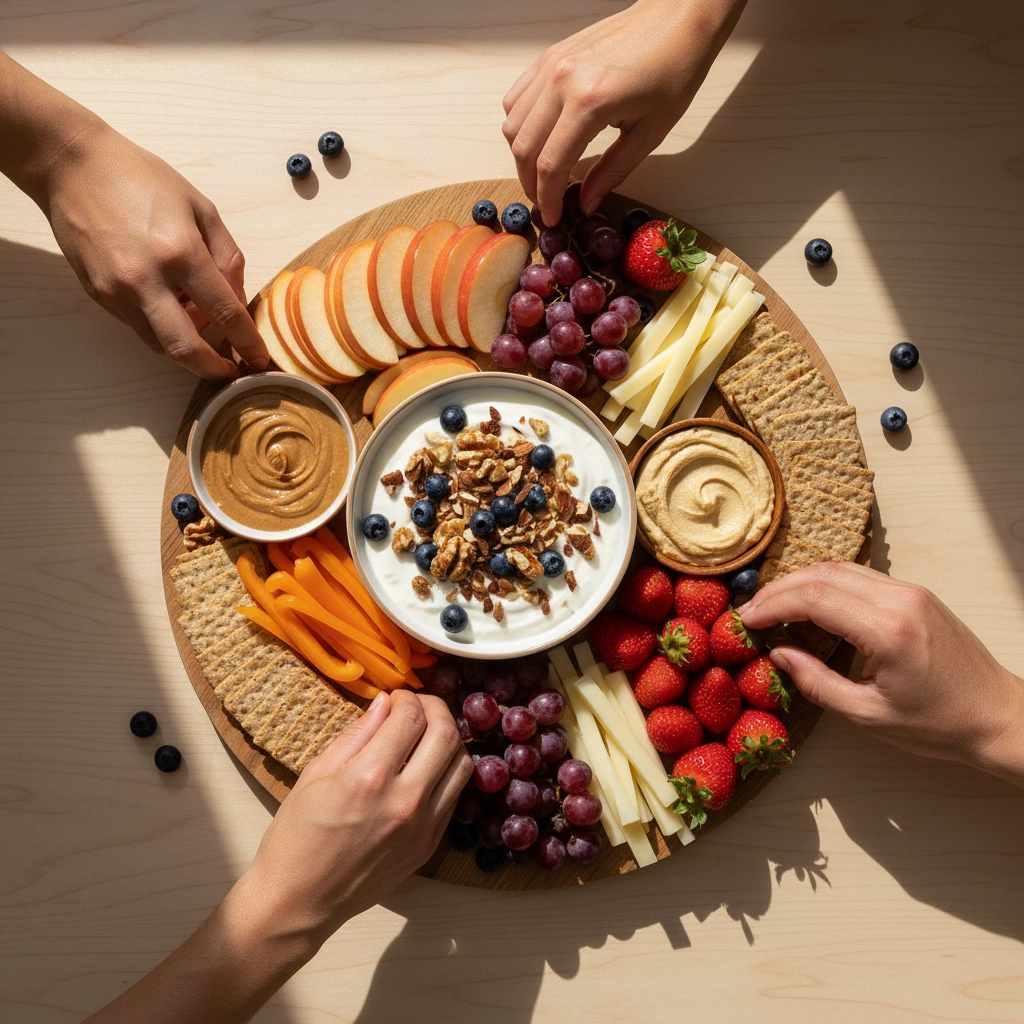
Tip #2: Snack With a Purpose: Protein + Fiber + Fat
The goal is steady energy between meals. Structure snacks so they actually do a job.
Target per snack:
Protein: ~10–20g
Fiber: 3–5g
Include some healthy fat
Examples:
Apple slices + almond butter
Greek yogurt + a handful of nuts
Whole-grain crackers + hummus
String cheese + berries
This combo gives quick fuel (carbs) and staying power (protein/fat/fiber), so you don’t boomerang back to the pantry.
Tip #3: Magnesium: Food-First for Better Energy Production
Magnesium is a cofactor in ATP production. Many adults under-consume it, especially women 40+. Start with food.
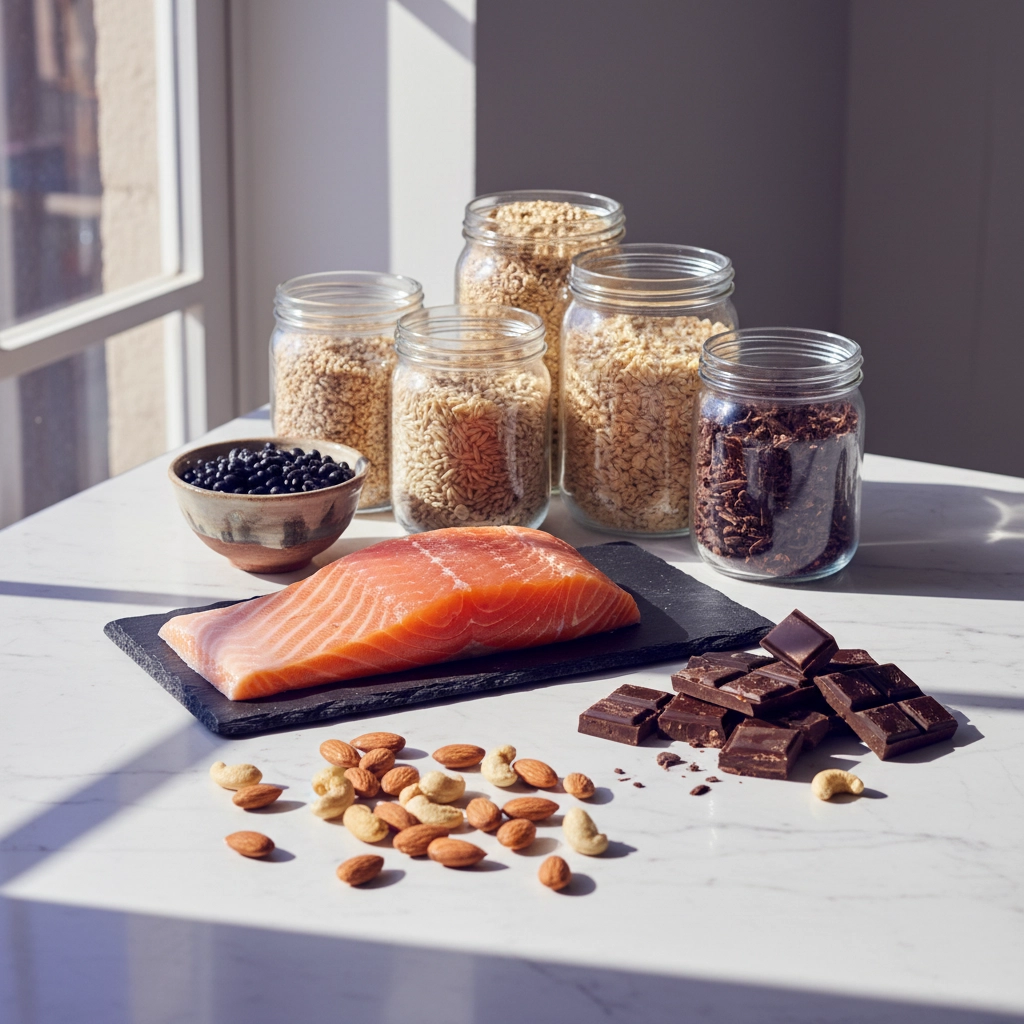
Magnesium-rich foods:
Whole grains and quinoa
Black beans and other legumes
Salmon and other fatty fish
Almonds, cashews, pumpkin seeds
Dark chocolate
Daily needs: women ~310–320 mg; men ~400–420 mg. If intake is consistently low or you suspect deficiency, talk to your clinician before supplementing (magnesium glycinate or citrate 200–400 mg can be useful; check meds/kidney history).
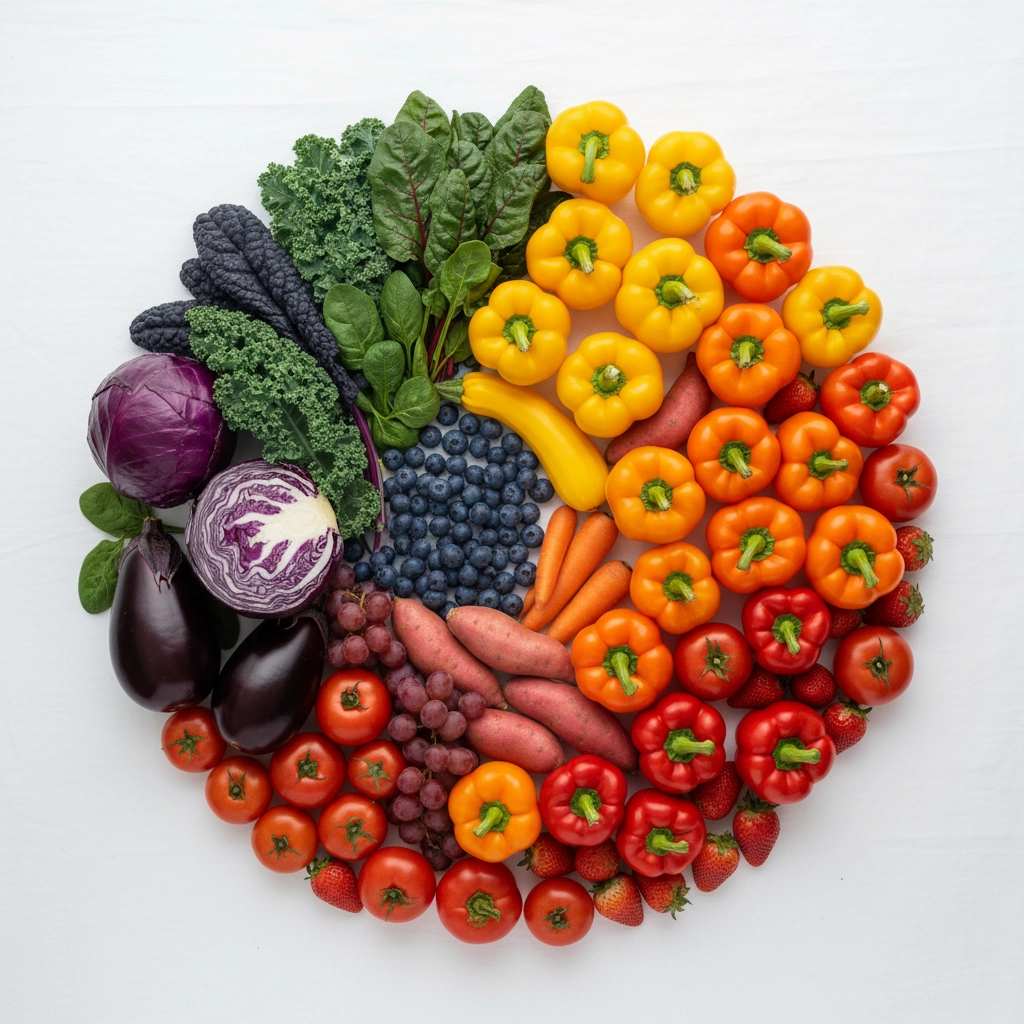
Tip #4: Colorful Produce Powers Your Energy Systems
Vitamins, minerals, polyphenols, and nitrates from fruits/vegetables support mitochondria, iron absorption, and recovery.
Focus on:
Dark leafy greens (spinach, kale, arugula)
Berries
Sweet potatoes and carrots
Bell peppers and broccoli
Citrus fruits
How to apply it:
Aim for 4–5 cups produce/day; include at least 2 colors per meal.
Add spinach to eggs, berries to oatmeal, or roast peppers with dinner.
Pair vitamin C foods (citrus, peppers) with iron sources to support absorption.
Tip #5: Hydration and Electrolytes (Not “Alkaline” Hacks)
You can’t change your blood pH with food. You can improve energy by avoiding mild dehydration and keeping electrolytes (especially sodium and potassium) in range.
What to do:
Fluids: ~2–3 L/day, more if you train, sweat, or are in heat.
Sodium: if you eat mostly whole foods and sweat, salt your meals to taste; consider a low-sugar electrolyte drink during longer/hot sessions.
Potassium-rich foods to balance fluids and support muscle/nerve function:
Making It Work in Real Life
Pick one lever and run it for 1–2 weeks:
Example options:
Track a simple energy score (1–10) at 10 a.m. and 2 p.m. If fatigue persists after a few weeks, talk to your clinician. Useful labs to discuss: CBC, ferritin/iron, B12, vitamin D, TSH, fasting glucose/A1C. Also consider sleep quality and apnea screening if symptoms fit.
Choose one action you can do today. Execute it consistently. That’s how you get your energy back.
Comments